Headline figures
Every figure below is compiled from the state code and published legal analysis, sourced per state, and free to cite with attribution. The full map and table sit on the main page.
The Dormancy Risk Index
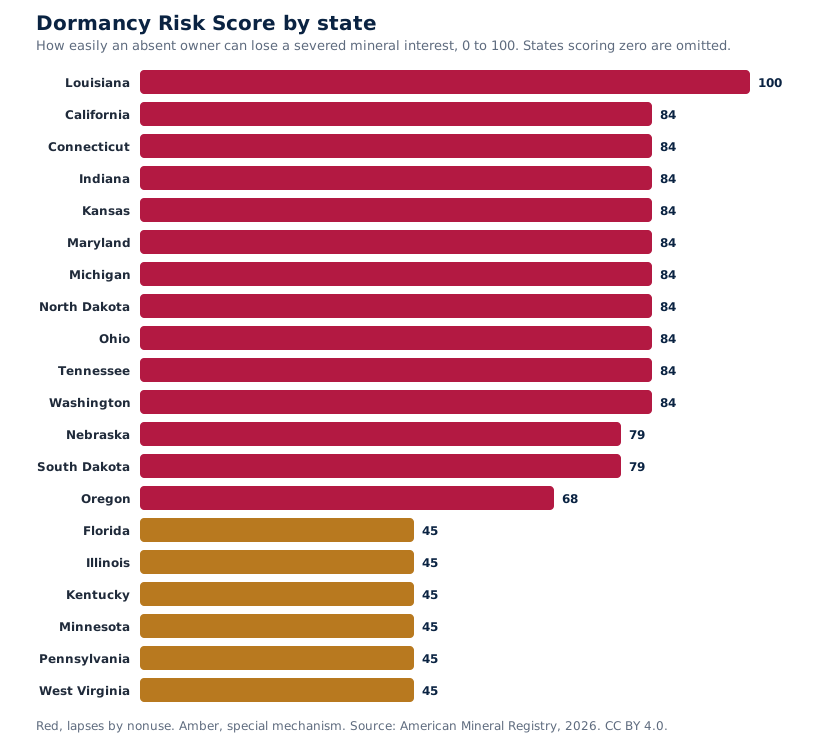
The Index rates all 51 jurisdictions 0 to 100 on how easily an absent owner can lose a severed mineral interest through nonuse. Louisiana tops it at 100 on a 10 year clock. These are the highest scoring states.
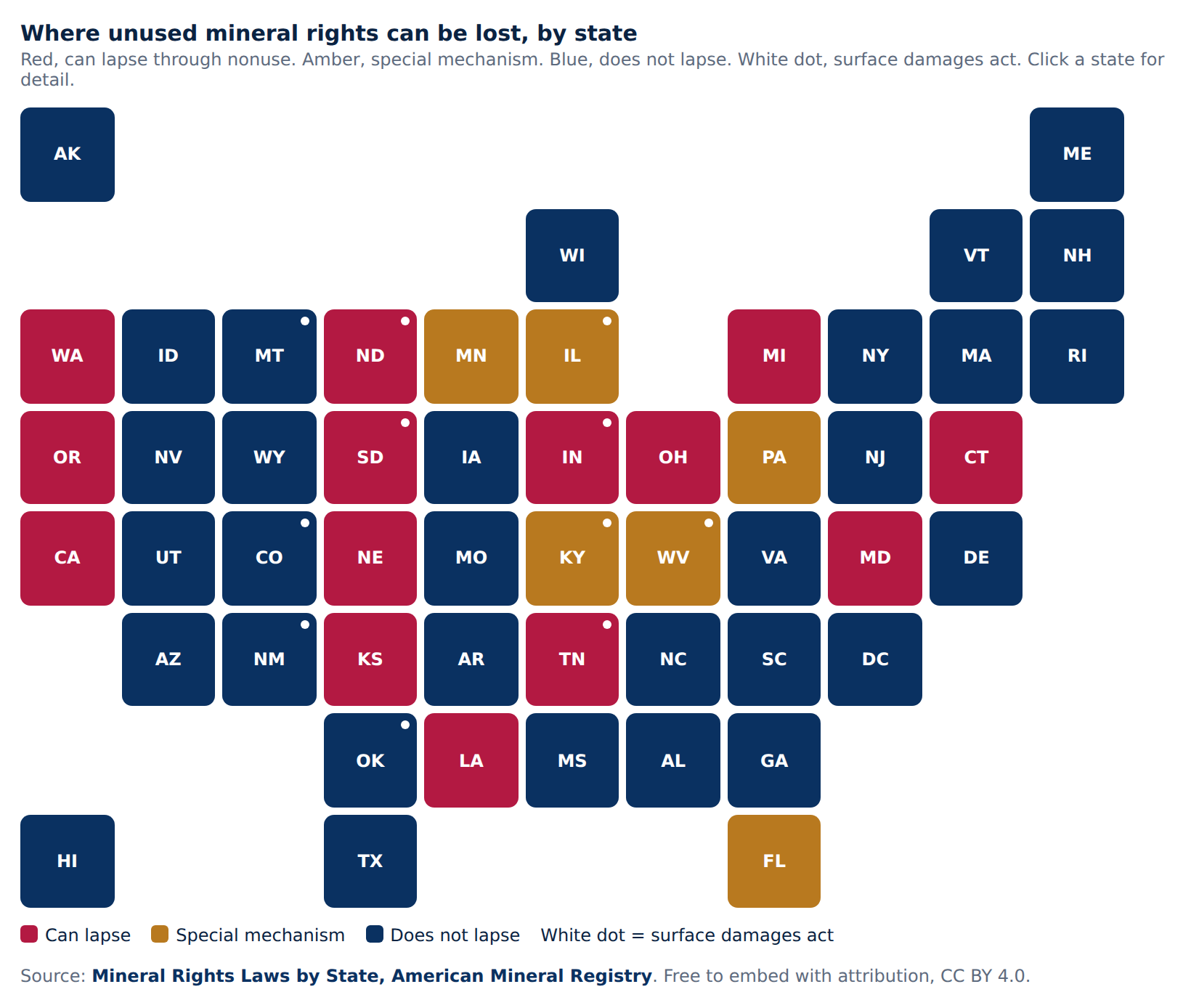
The map
Free to embed in any article with attribution.
Downloads
Images, the full dataset, and ready made citations.
How to cite
Plain reference:
BibTeX:
Editorial standards
This project is compiled and maintained by the American Mineral Registry research team, a brand of American Mineral Registry LLC. Each state entry is built from the primary statute and corroborating legal analysis. Where a primary source is available online it is linked directly. Every cell carries a source status: sourced means a primary statute is cited, surveyed means national statutory surveys confirm no dormant act exists.
We log corrections in a public changelog on the main page, mark a last reviewed date, and publish a fresh edition each year. Spotted an error or a statute change? Write to offers@americanmineralregistry.com and we will review and credit the correction.
Related open data
A companion dataset, state tax on mineral and royalty income, maps state income tax and oil and gas severance treatment across all fifty states and D.C. It is released under the same Creative Commons Attribution 4.0 licence and is free to cite.
Licence and contact
All figures, the dataset, the map and the chart are released under Creative Commons Attribution 4.0. You may use them anywhere with credit to American Mineral Registry and a link to https://americanmineralregistry.com/research/mineral-rights-by-state.html. Press and data questions: offers@americanmineralregistry.com.