Owner guide
Best Way to Sell Mineral Rights: Every Route Compared for 2026
The best way to sell mineral rights depends on how many buyers you let compete for them. A letter from one buyer gives you one price; an auction, a listing site or a request for written offers puts several against each other, at a cost to you that runs from nothing to 15 percent of the price. These are the routes an individual owner can use, with what each costs as its own site states it.
Where to look first
Every route below ends the same way, with a deed signed at a closing. What differs is how many buyers see your interest, how long it takes and what comes out of your price. If you are not sure you should sell at all, start with should I sell my mineral rights.
| If you want | Look at |
|---|---|
| Several offers, nothing to pay, no public listing | American Mineral Registry (1) |
| A producing interest and time to wait for bids | EnergyNet (3) or the Clearinghouse (4) |
| A price in mind and buyers who come to you | US Mineral Exchange (5), LandApp (6), Mineral Hub (8) |
| Statements already in EnergyLink | Enverus Minerals Marketplace (7) |
| A package worth millions | Detring Energy Advisors (10) |
| A letter already in hand | Check the buyer, then compare it with other offers (2) |
How we checked
Every service below was opened on its own site on October 5, 2026, and each price, place and rule is the one its own pages state. We read their pages; we did not sign up, pay or sell through any of them, so nothing here claims a test we did not run.
Fees are quoted exactly as each one publishes them; where a fee is not published, the entry says so. Two sites were left out, one whose fee page no longer exists and one whose newest completed auction is from 2013.
No company paid to be listed, and there are no affiliate links.
How the routes compare
| Route | Type | What the seller pays | Can you refuse every bid |
|---|---|---|---|
| American Mineral Registry | Offer service | Nothing | Yes |
| Selling direct to one buyer | Direct sale | Usually nothing | Yes |
| EnergyNet | Online auction | 15% to 5% if sold, $1,500 minimum | Yes, below reserve |
| The Oil & Gas Asset Clearinghouse | Live and online auction | Not published | Yes, below reserve |
| US Mineral Exchange | Listing site | Nothing; buyer pays 6% | Yes |
| LandApp | Listing site | Nothing, it says | Yes |
| Enverus Minerals Marketplace | Listing site | No fees, it says | Not stated |
| Mineral Hub | Listing site | Buyer pays; offers shown net | Yes |
| The Mineral Auction | Broker | Fee tied to price, rate not published | Not stated |
| Detring Energy Advisors | Sell side adviser | Not published | Not stated |
1. American Mineral Registry, written offers from one request
This is us, the site you are reading
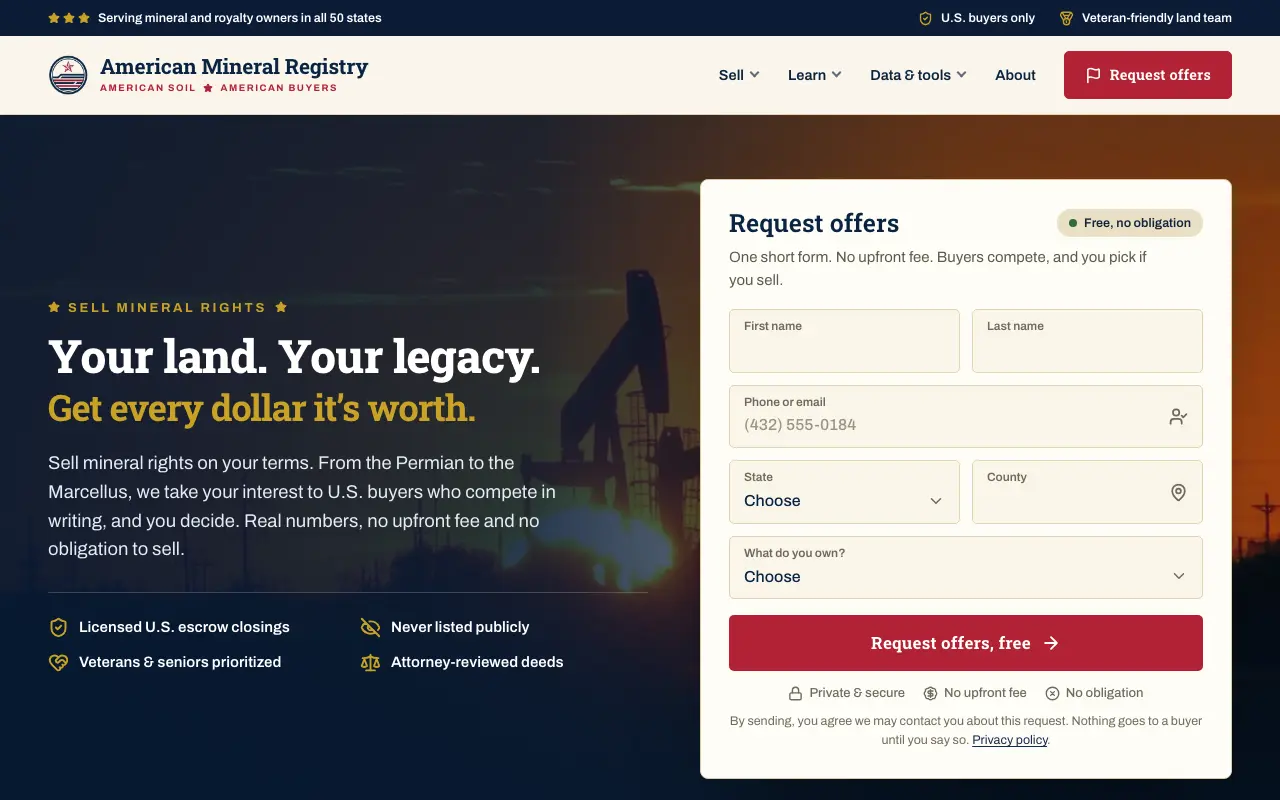
American Mineral Registry asks buyers for written offers on your interest, so you can compare them without listing it publicly or paying anything.
- Use it for
- Seeing what several buyers would pay before you choose
- What you pay
- Nothing
- Limit
- Usually we are the buyer named in the offer
Usually we buy the interest ourselves and the offer says so; we may resell it, and that is how we are paid. You never pay us, and you can turn down every offer.
If you accept, a licensed title company, escrow agent or closing attorney holds the money, records the deed and pays you.
Request offers Free to ask, and you are never obliged to sell.
2. Selling direct to one buyer, the letter in your mailbox
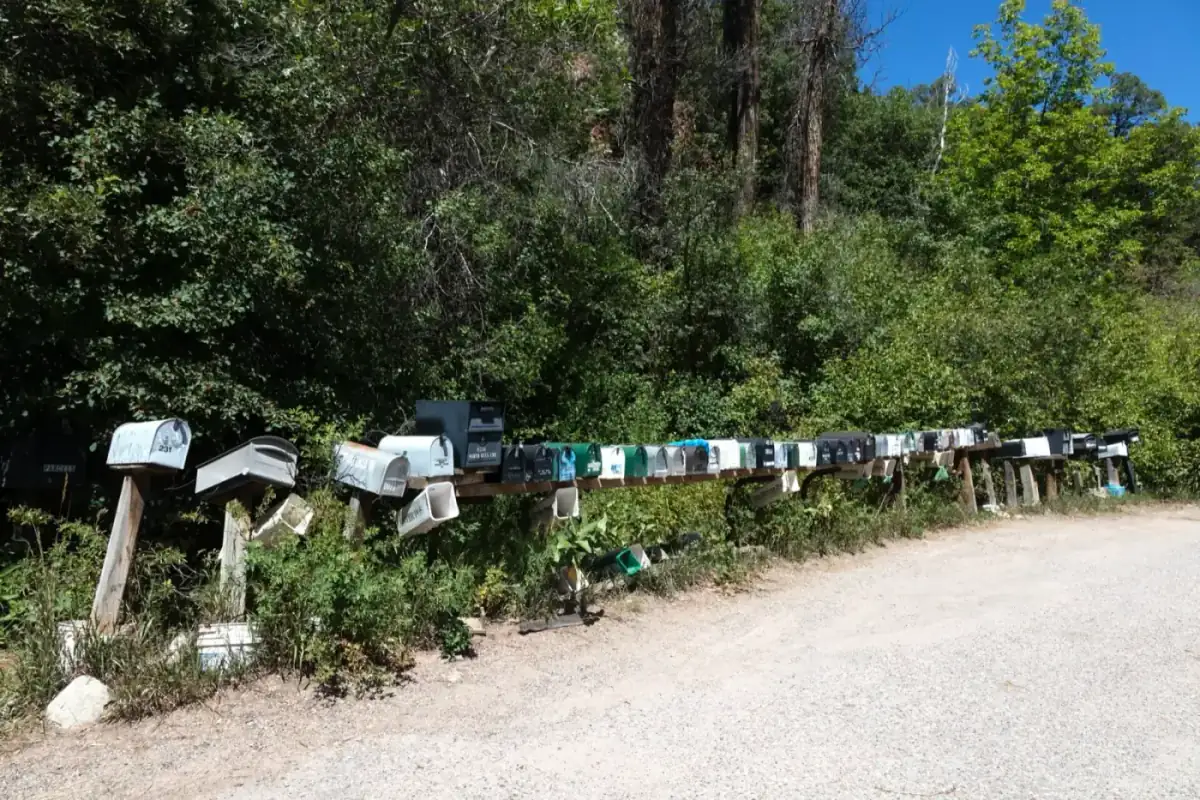
Most owners first hear from a buyer by letter, and answering it is the simplest way to sell: one buyer, one price, one closing.
- Use it for
- A buyer you have checked whose number you can test against others
- What you pay
- Usually nothing; the buyer covers closing costs if the offer says so
- Limit
- You see one buyer’s view of your interest and nothing to compare it with
NARO, the royalty owners’ association, warns that unsolicited offers are often well below market value and advises getting several on comparable terms. Our list of companies that buy mineral rights names fifteen that say they buy from owners.
Read on October 5, 2026: naro-us.org, valuation guide
3. EnergyNet, an online auction with a reserve
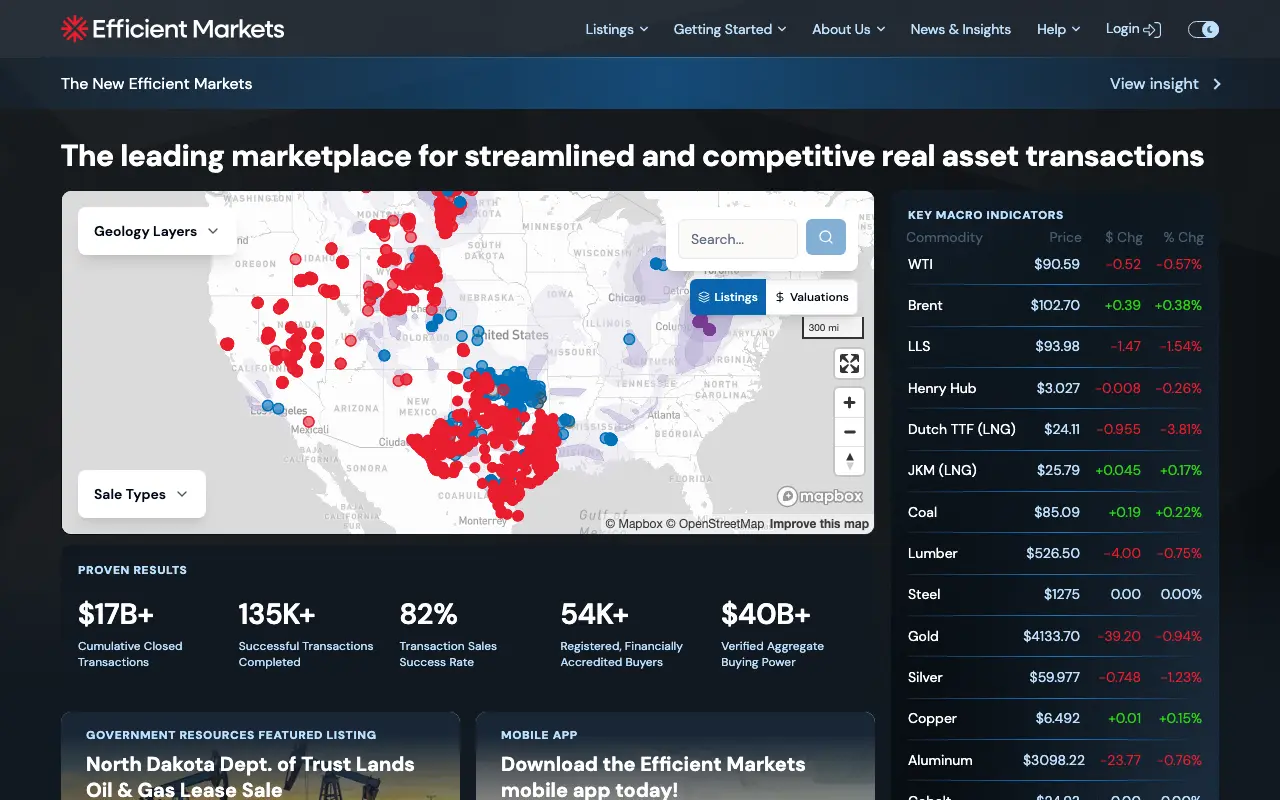
EnergyNet, now trading as Efficient Markets, auctions oil and gas interests online to registered buyers, with a confidential reserve price set by the seller.
- Use it for
- Producing interests large enough to draw bidders
- What you pay
- A commission only if it sells: 15 percent up to $25,000, sliding to 5 percent above $1 million, with a $1,500 minimum
- Limit
- Listing fees of up to $1,500 can apply to small or nonproducing lots, and payment takes about 35 to 45 days
Each lot gets a 14 day preview and then a 7 day online auction. If bidding misses your reserve, you can refuse the high bid or counter it.
Read on October 5, 2026: efficientmarkets.com, questions and the 2026 seller agreement
4. The Oil & Gas Asset Clearinghouse, a live and online auction in Plano
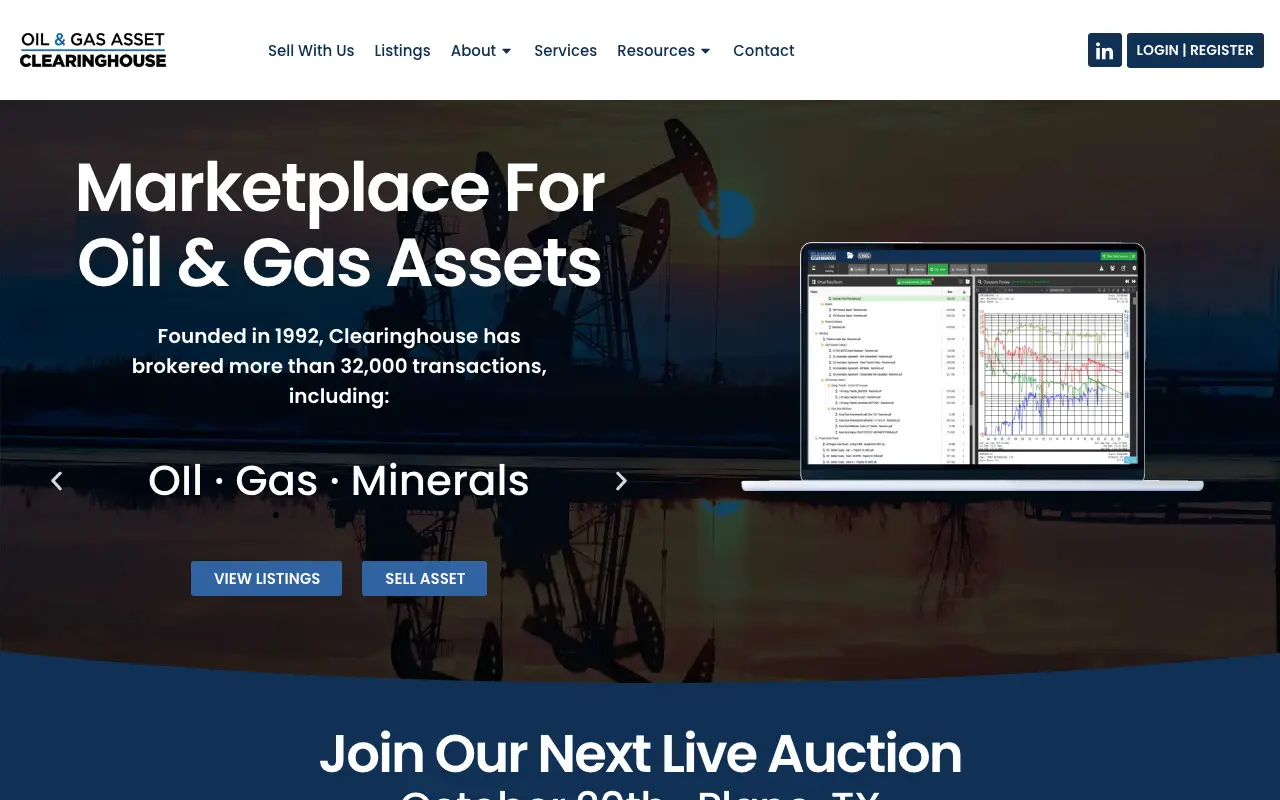
The Clearinghouse sells minerals and royalties at live auctions in Plano, Texas, where floor and online bidders compete against a reserve.
- Use it for
- Interests worth roughly $10,000 to $20 million
- What you pay
- Not published; it offers a value assessment without charge
- Limit
- Its seller fee is not on its site, so ask for it in writing first
It says a live auction sale takes about 30 to 60 days, and larger assets over $10 million go to a negotiated sale that takes three to six months. You are not obliged to accept a bid below your reserve.
Read on October 5, 2026: ogclearinghouse.com, services
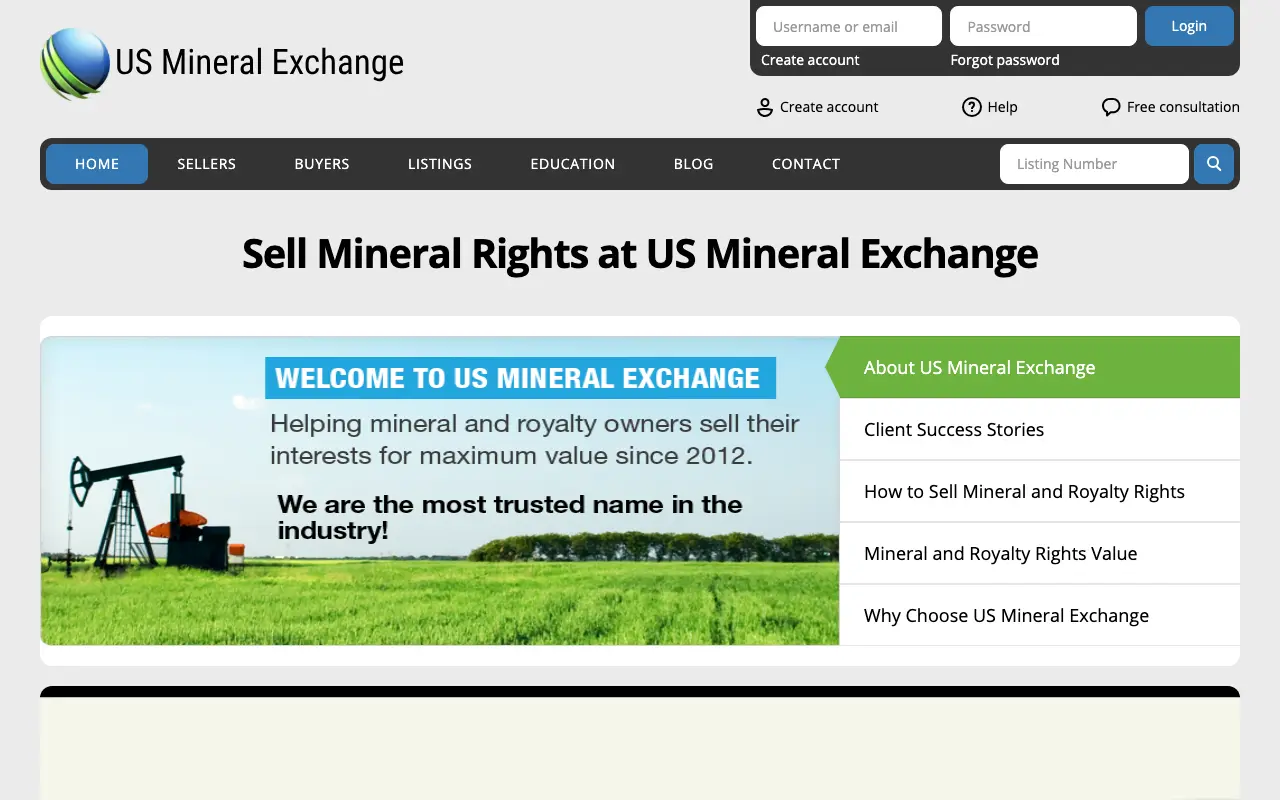
5. US Mineral Exchange, a listing site where the buyer pays the fee
US Mineral Exchange writes a listing for your interest at an agreed price, markets it to its buyers and passes their offers to you.
- Use it for
- Owners who want buyers to come to them at a set price
- What you pay
- Nothing; the buyer pays a 6 percent commission at closing, on top of the price
- Limit
- The listing agreement can be exclusive, so read it before you sign
It says nothing is owed if it cannot beat an offer you already hold, and you can take an offer or walk away.
Read on October 5, 2026: usmineralexchange.com, cost to list
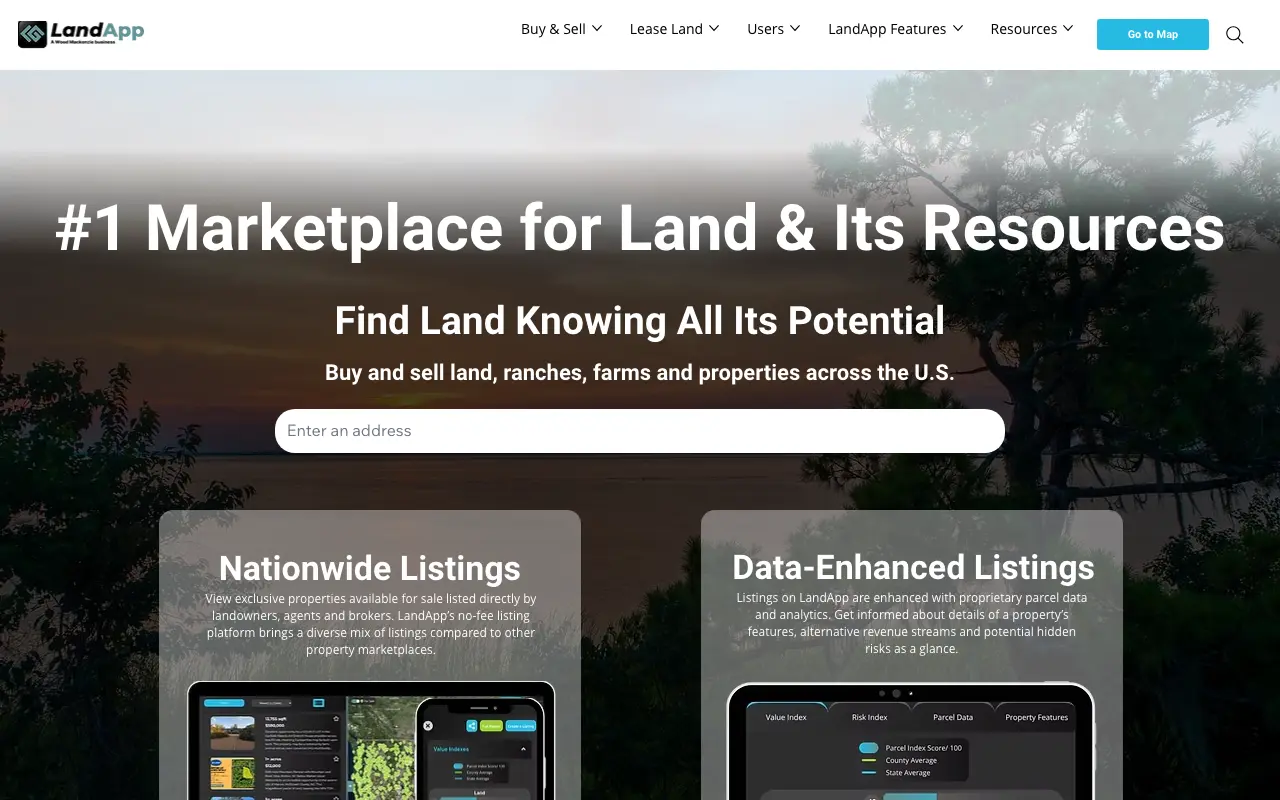
6. LandApp, a free listing site, formerly LandGate
LandApp, formerly LandGate, lets owners list minerals for sale or lease free of charge, with a valuation report, and buyers send offers through the site.
- Use it for
- Listing for sale and for lease at the same time
- What you pay
- No listing fee and no commission on an accepted offer, it says
- Limit
- It leads with leasing, and whether buyers pay a fee is not stated
You are under no obligation to accept any offer.
Read on October 5, 2026: landapp.com
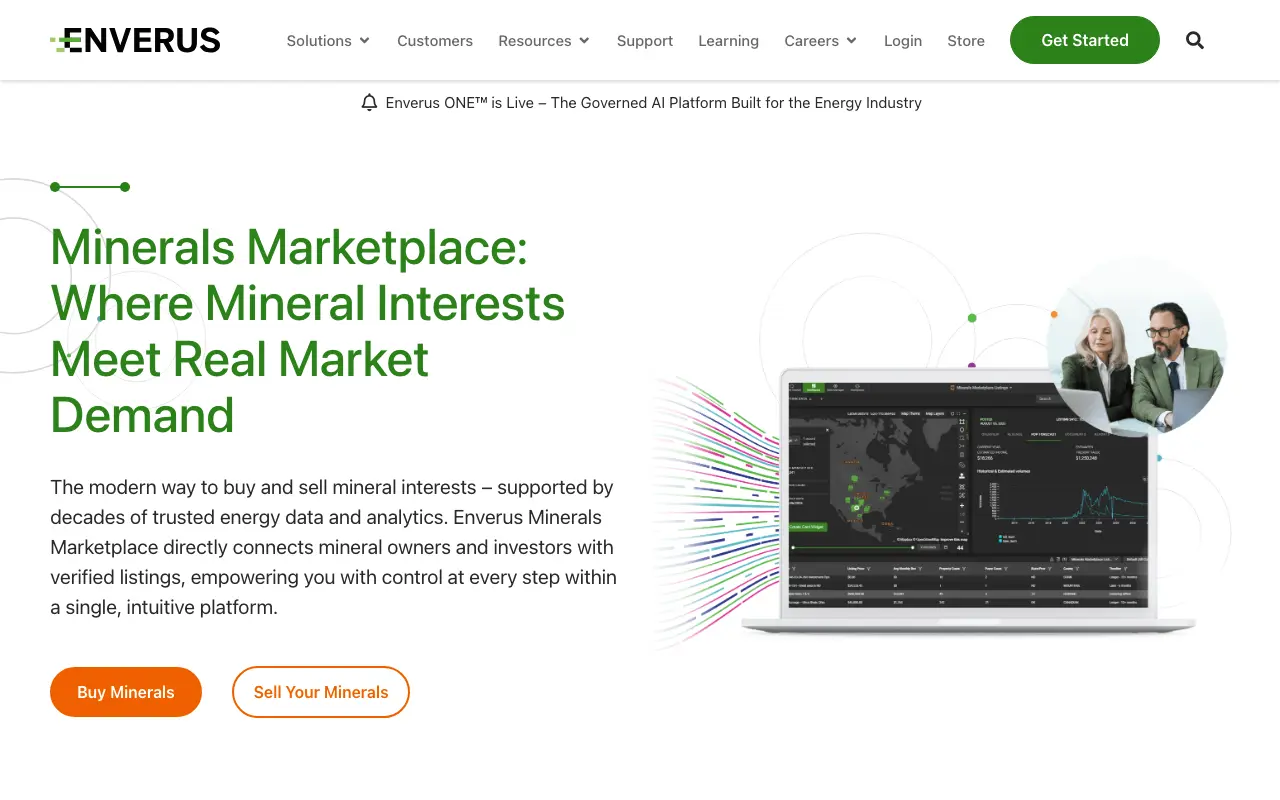
7. Enverus Minerals Marketplace, a listing site inside EnergyLink
Owners list through an EnergyLink account, choose who sees the listing and talk to buyers directly in the app.
- Use it for
- Owners who already get statements through EnergyLink
- What you pay
- No fees and no contracts, it says
- Limit
- You need an EnergyLink account, and you handle the buyers yourself
Enverus says the marketplace carries more than 400 active listings across the major U.S. basins.
Read on October 5, 2026: enverus.com
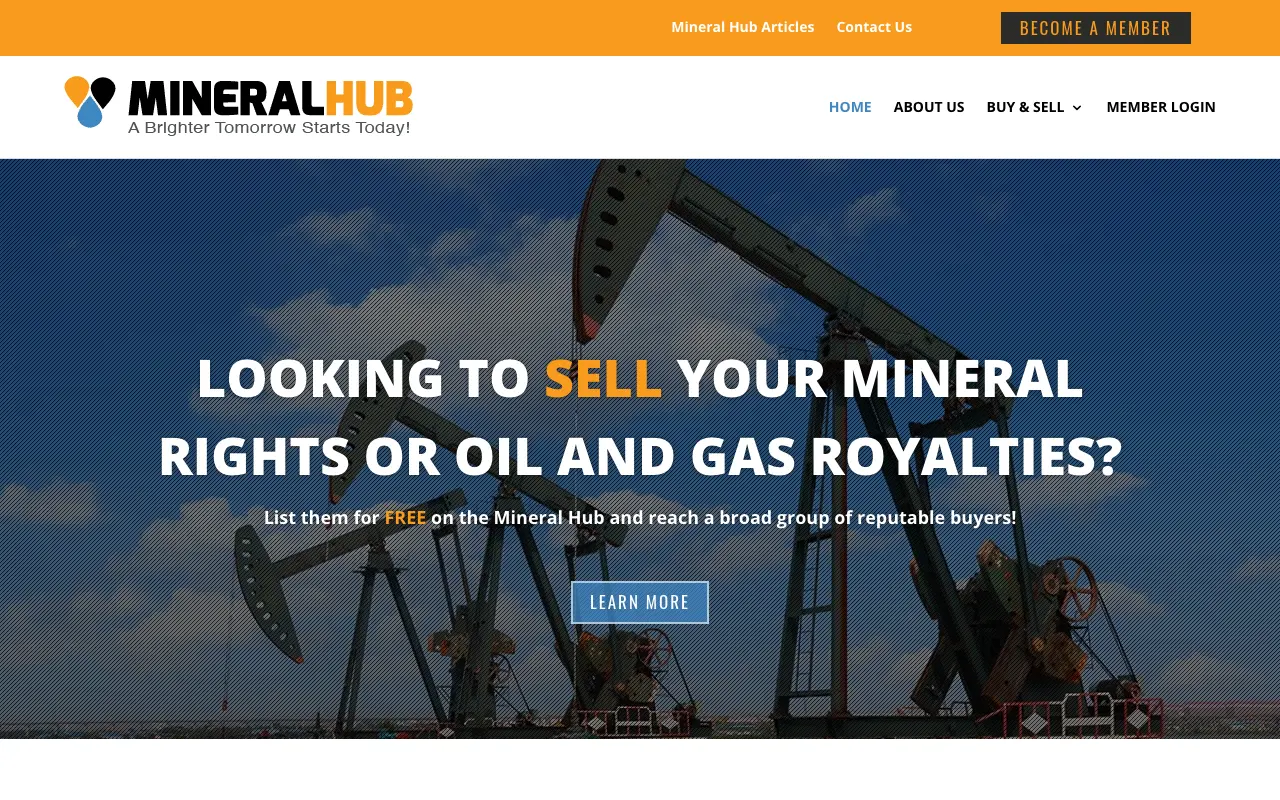
8. Mineral Hub, a free listing site with offers net of commission
Mineral Hub lets owners list minerals or royalties for sale free of charge and passes buyer offers through the site.
- Use it for
- A listing that runs for a few weeks while offers come in
- What you pay
- Nothing directly; the buyer pays the commission at closing and offers are shown net of it
- Limit
- Listings run at least 21 days under its listing agreement
Because the commission comes out of what the buyer pays, compare its offers with others on the same net basis.
Read on October 5, 2026: mineralhub.com, listing agreement
9. The Mineral Auction, a broker that has buyers bid against each other
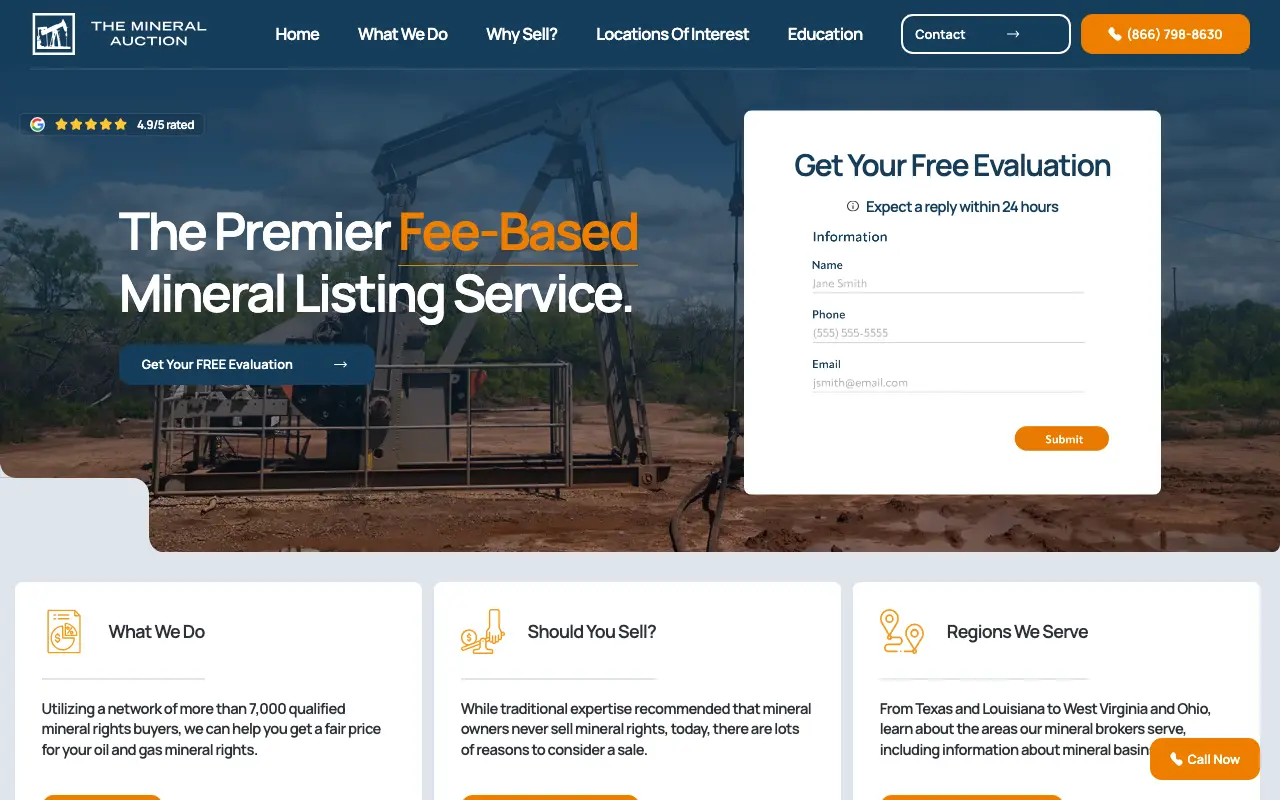
The Mineral Auction puts your rights in front of its buyer database so that buyers bid against each other, and says it works anywhere in the U.S.
- Use it for
- Owners who want a broker to run the bidding
- What you pay
- A fee tied to the sale price; the rate is not published
- Limit
- Ask for the fee in writing before you sign anything
It names Texas, Louisiana, West Virginia and Ohio among the places it works.
Read on October 5, 2026: auctionmineralrights.com, listing service
10. Detring Energy Advisors, a sell side adviser for large packages
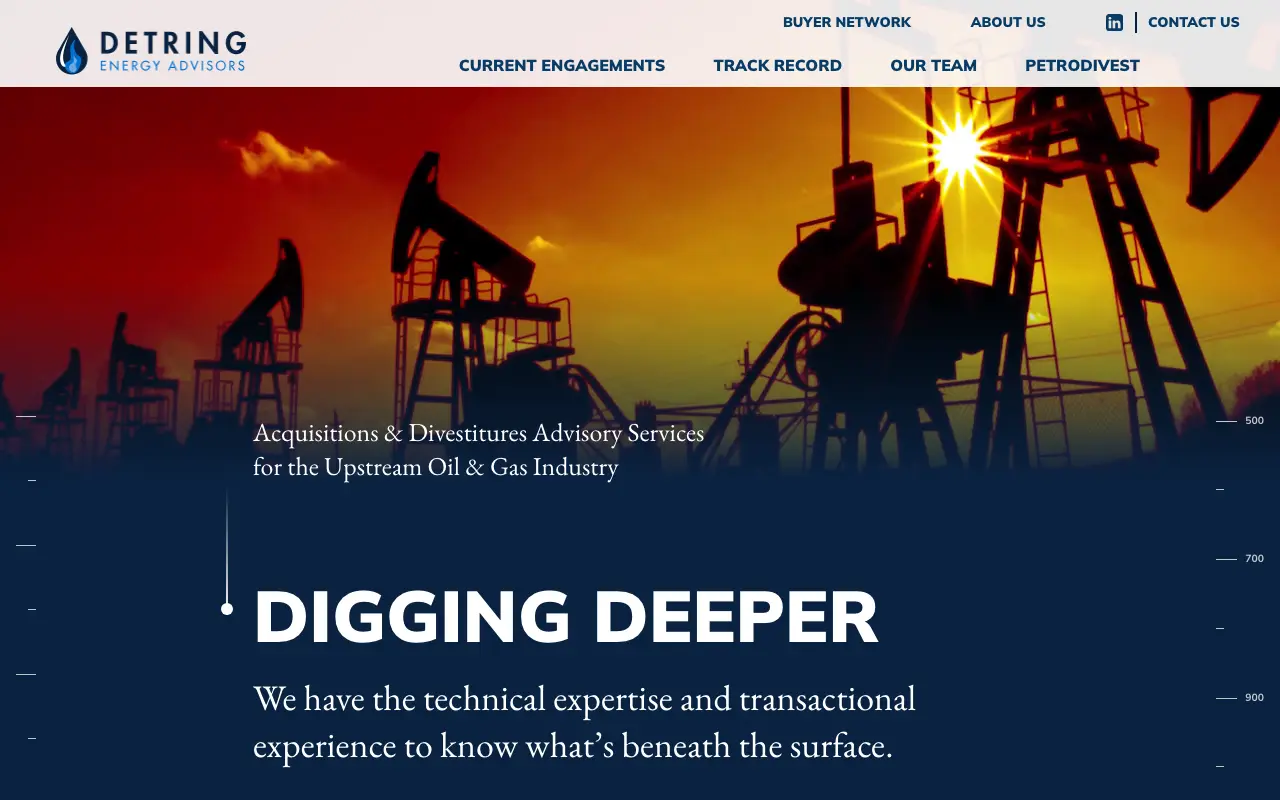
Detring and its PetroDivest arm build data rooms, market a package to acquirers and collect sealed bids on a set date, then negotiate with the chosen buyer.
- Use it for
- Families or estates holding packages worth millions
- What you pay
- Not published
- Limit
- PetroDivest works on assets of $5 million to $30 million, far above a typical inherited interest
For most individual owners, an auction, a listing or several written offers fits the size of the interest better.
Read on October 5, 2026: detring.com, PetroDivest
Before you sell through any of them
Read the deed, not the letter. In 2008 the Louisiana attorney general warned owners that a mailed “lease” with a check attached could be a mineral deed that signs away every mineral you own. Have an attorney read anything you are asked to sign.
Close through an independent agent. A title company, escrow agent or closing attorney should hold the money and record the deed. Our guide to how to sell mineral rights walks through the closing.
Know what you own first. Our royalty calculator (opens in a new tab) shows what your decimal and production add up to each month, and the free mineral rights search by state (opens in a new tab) finds your wells.
How to choose
| If | Start with |
|---|---|
| You want the most buyers to see it | An auction (3, 4) or several written offers (1) |
| You want it private | Written offers (1) or a direct sale (2), not a public listing |
| You want no fee at all | Written offers (1), or a listing site where the buyer pays (5, 6, 7, 8) |
| The interest is small or nonproducing | Written offers (1) or a listing site; auction fees bite hardest on small lots |
| You are an estate with a large package | A sell side adviser (10) or an auction (3, 4) |
Common questions
How long does it take to sell mineral rights?
An online auction runs a 14 day preview and a 7 day sale, with payment about 35 to 45 days after you submit, per EnergyNet. A direct sale or a written offer closes when title is checked and the deed is recorded.
Do I pay a commission to sell?
It depends on the route. Auctions charge the seller a percentage if the lot sells; several listing sites charge the buyer instead; written offers and direct sales usually cost the seller nothing.
Can I sell only part of my mineral rights?
Yes. You can sell a fraction of an interest, or some tracts and not others, as long as the deed describes exactly what is sold.
Should I sell or lease my mineral rights?
A lease keeps the minerals and pays a bonus and a royalty if a well is drilled; a sale ends your income from them for one payment now. Our guide to selling or keeping sets the choice out.
Is the highest offer always the one to take?
Not always. Compare who pays closing costs, the effective date, whether royalties held in suspense go to you, and what exactly the deed conveys.
Summary
The more buyers who see your interest, the more likely you are to see its real range, and the routes differ mainly in how many see it and what they cost you. Whatever route you choose, read the deed and close through an independent agent. Tell us about your interest and we will ask buyers for written offers.
Sources
Every page below was opened on October 5, 2026.
- EnergyNet (Efficient Markets), how do I sell, questions and 2026 seller agreement
- The Oil & Gas Asset Clearinghouse, services
- US Mineral Exchange, cost to list
- LandApp, lease or sell mineral rights
- Enverus, Minerals Marketplace
- Mineral Hub, listing agreement
- The Mineral Auction, listing service
- Detring Energy Advisors, PetroDivest
- NARO, mineral rights valuation guide
- Louisiana attorney general, consumer alert on mineral leases and deeds, August 15, 2008
Cite this list
American Mineral Registry. "Best Way to Sell Mineral Rights: Every Route Compared for 2026." Release 2026.10.1, October 5, 2026. https:// americanmineralregistry.com/ guides/ best-way-to-sell-mineral-rights
[Best Way to Sell Mineral Rights: Every Route Compared for 2026](https:// americanmineralregistry.com/ guides/ best-way-to-sell-mineral-rights), American Mineral Registry, release 2026.10.1 (October 5, 2026).
<a href="https:// americanmineralregistry.com/ guides/ best-way-to-sell-mineral-rights">Best Way to Sell Mineral Rights: Every Route Compared for 2026</ a>, American Mineral Registry, release 2026.10.1 (October 5, 2026).
@online{amr_best_way_to_sell_mineral_rights_every_route_compared_for_2026_2026101,
  author = {{American Mineral Registry}},
  title = {Best Way to Sell Mineral Rights: Every Route Compared for 2026},
  version = {2026.10.1},
  date = {2026-10-05},
  url = {https://americanmineralregistry.com/guides/best-way-to-sell-mineral-rights}
} TY - ELEC AU - American Mineral Registry TI - Best Way to Sell Mineral Rights: Every Route Compared for 2026 ET - 2026.10.1 DA - 2026/10/ 05 UR - https:/ / americanmineralregistry.com/ guides/ best-way-to-sell-mineral-rights ER -
One short form, free, no obligation
Find out what your American soil would bring, before the next letter lands in your mailbox.
Private & discreetWritten offers onlyU.S. escrow closing
Proudly serving all 50 states